From bulk material to truck — fully integrated.
One continuous loop of the plant in side elevation: material is grabbed into the feed hopper, elevated to the buffer hopper, weighed into a 50 kg HDPE bag, stitched, conveyed, optionally palletized, and loaded into the truck.
15 second loop · palletization shown as an optional branch · reduced motion respected
The block diagram behind the line.
One system. From hopper to truck.
Aeon Tech Solutions can engineer and integrate the complete material-handling and bagging line around the customer's product, capacity and plant layout.
Rather than supplying isolated equipment, the system can be designed as a coordinated process from bulk material receiving through final bag loading.
{{ p.v }}
Weighing and filling, in one automatic sequence.
Aeon Tech Solutions can integrate automatic bagging systems for filling suitable granular and powdered bulk products into industrial bags, including applications requiring approximately 50 kg bag sizes.
Typical bag size: up to 50 kg, subject to material, bag specification and machine configuration.
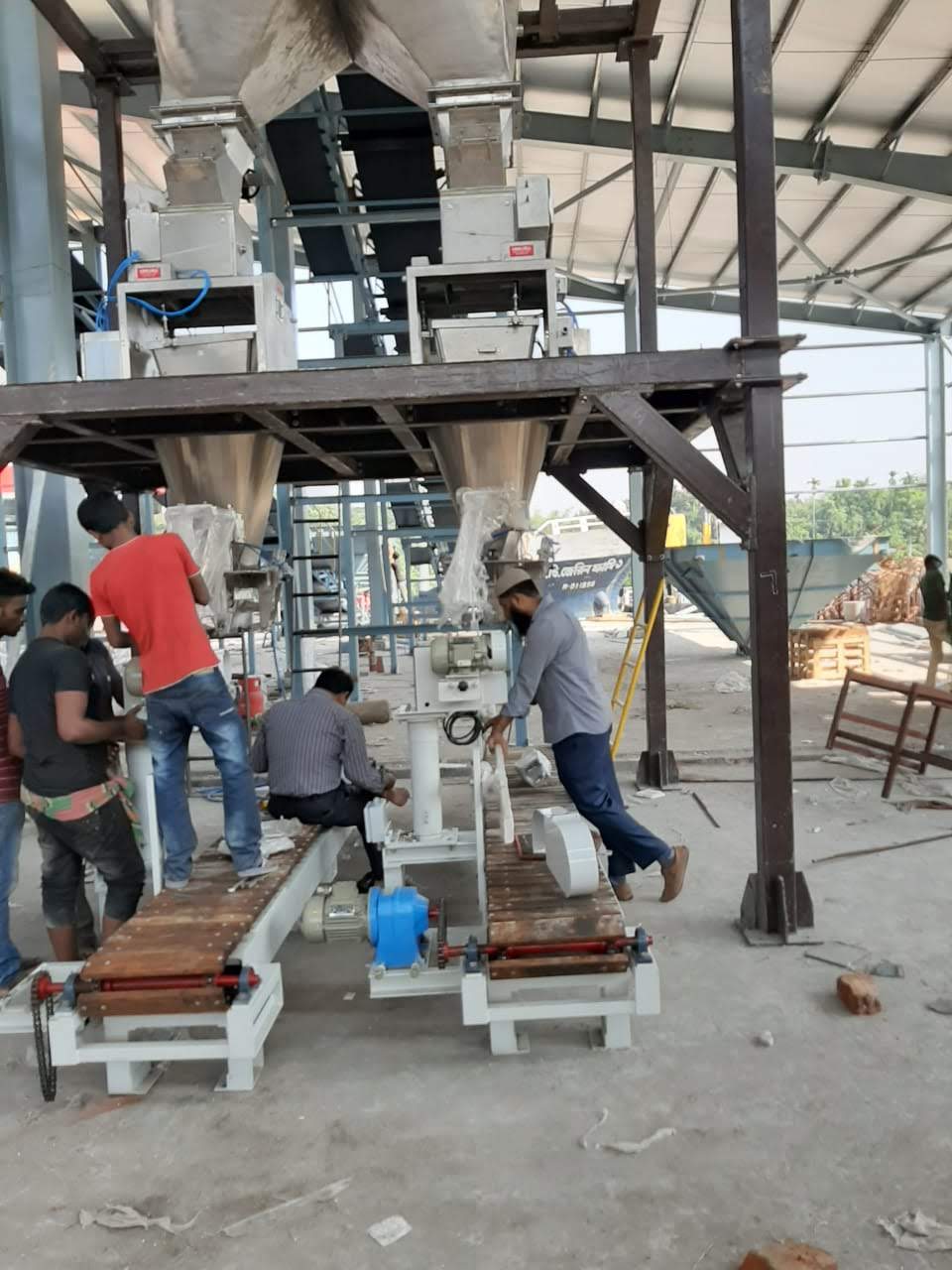
The 50 kg HDPE bag, filled automatically.
The system can be configured for automatic filling of bulk products into industrial HDPE bags, including applications commonly requiring 25–50 kg packaging formats.
May be suitable forSuitability is confirmed against material characteristics, bag specification and required capacity before a machine is proposed.
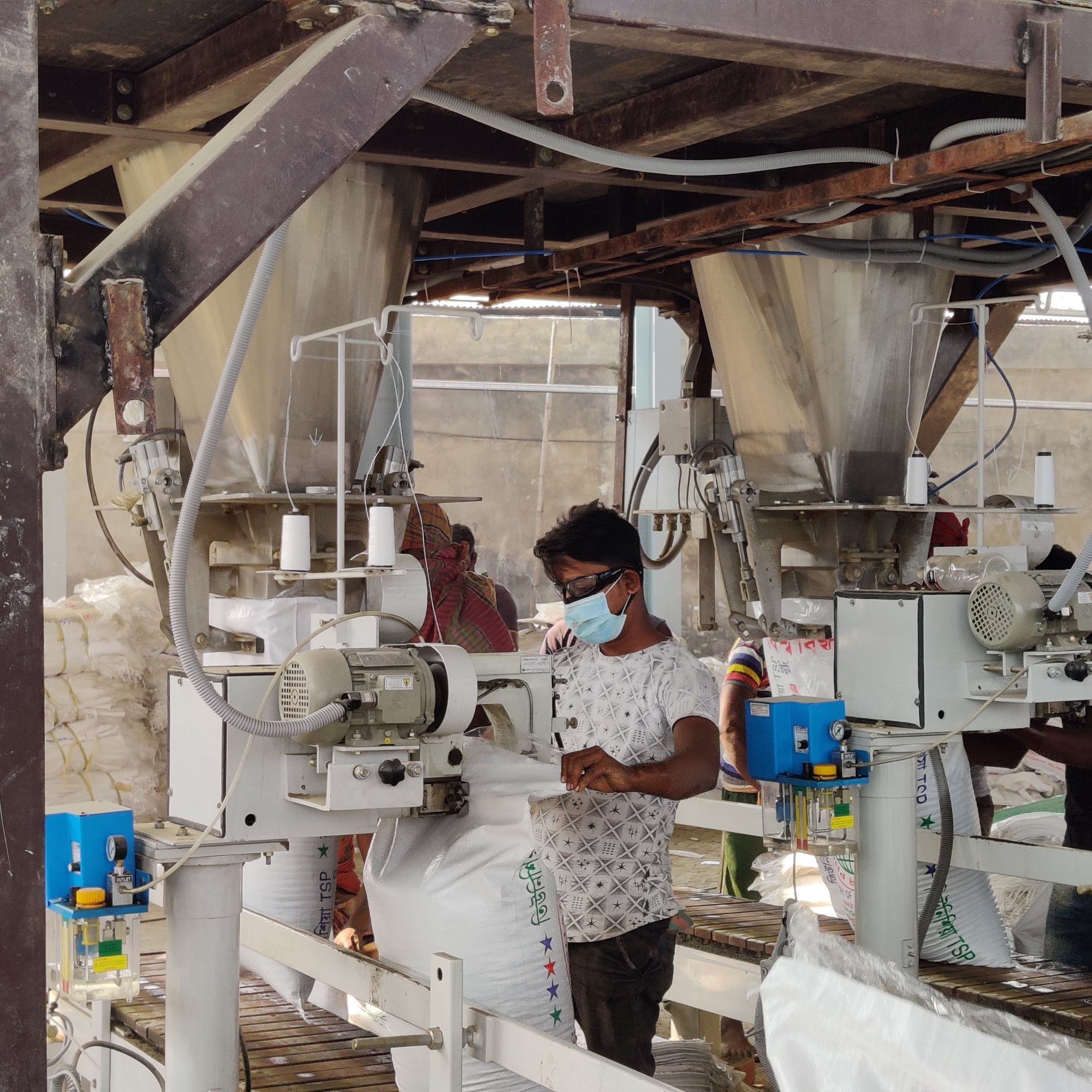
Handling a wide range of bulk materials.
Designed around your material.
The bagging system is selected from the behaviour of the product itself. No machine suits every material, so the selection starts with what the product does in a hopper, in a conveyor and at a filling spout.
Controlled storage, controlled discharge.
Hoppers provide controlled storage and feeding of bulk material into the conveying or bagging system. Configuration depends on the material, the feed method and the available height — not all of the arrangements below are standard products.
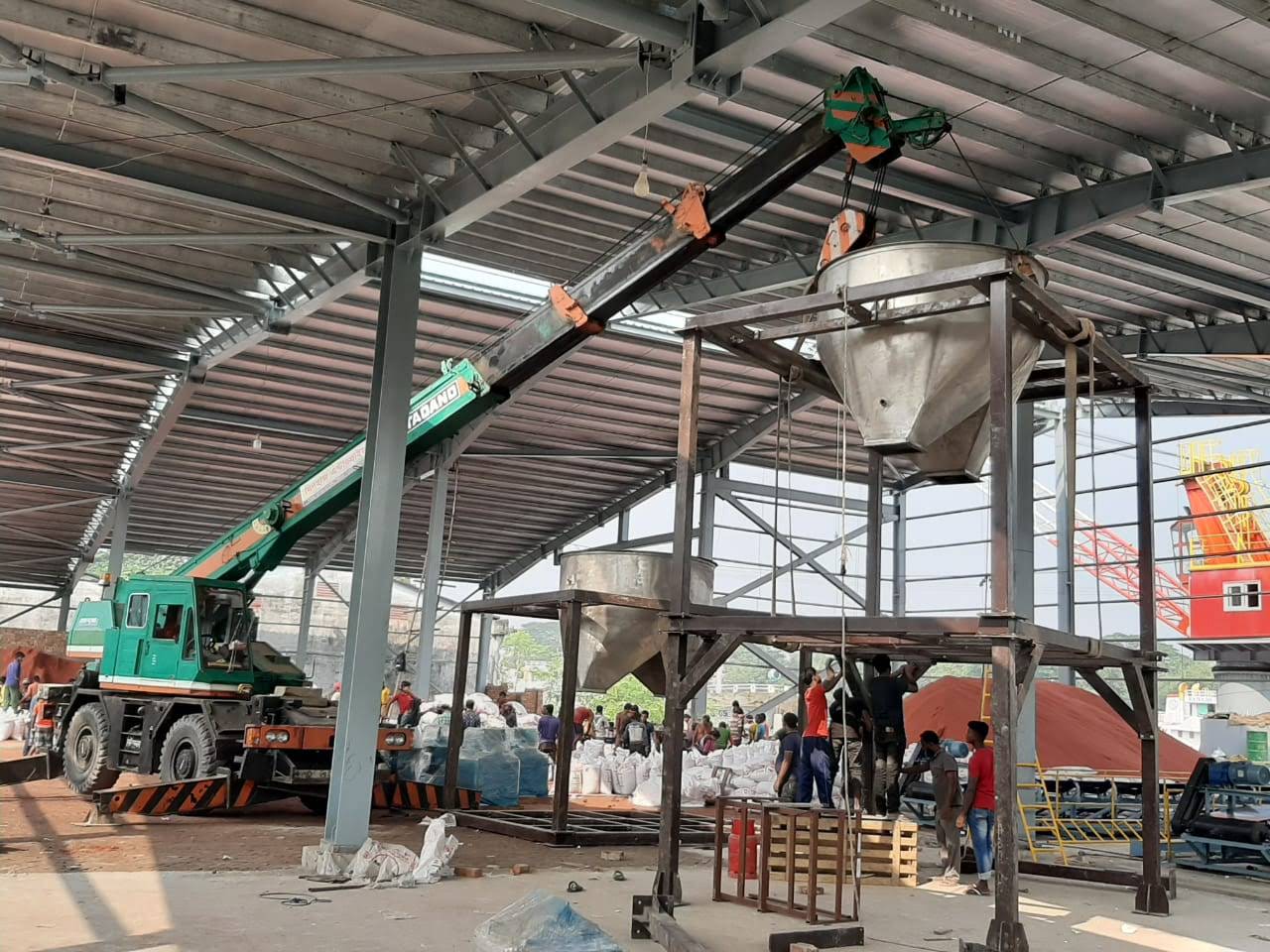
The conveying technology follows the material.
Belt, screw, bucket, chain and pneumatic conveying each suit a different combination of material behaviour, route and elevation. The selection is made per project — a line does not use all of them at once.
Automatic bag stitching & closing.
Filled bags can be conveyed automatically from the bagging machine to a stitching or closing station, with the bag top prepared and aligned before the head engages.
From the machine to the point of dispatch.
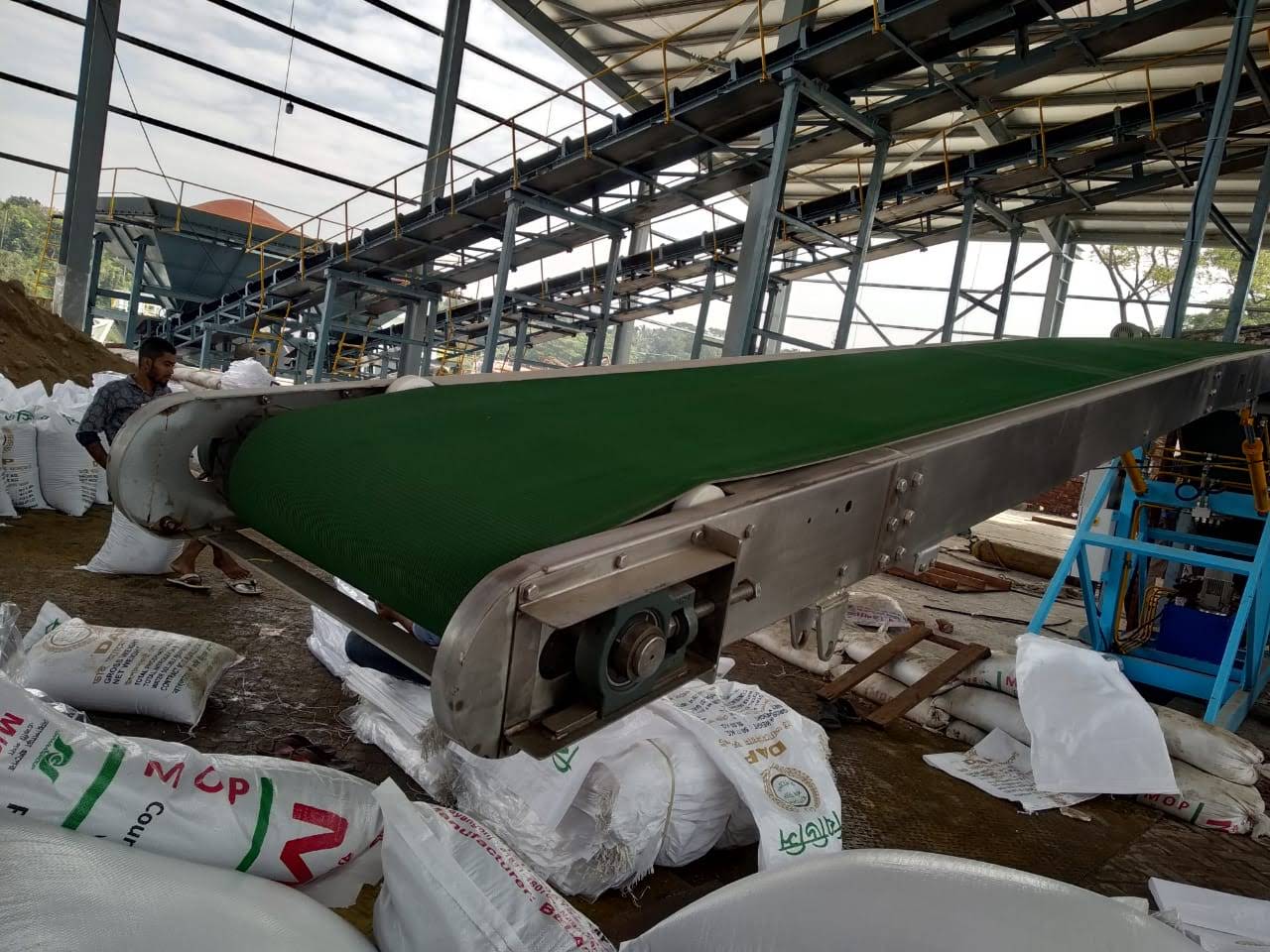
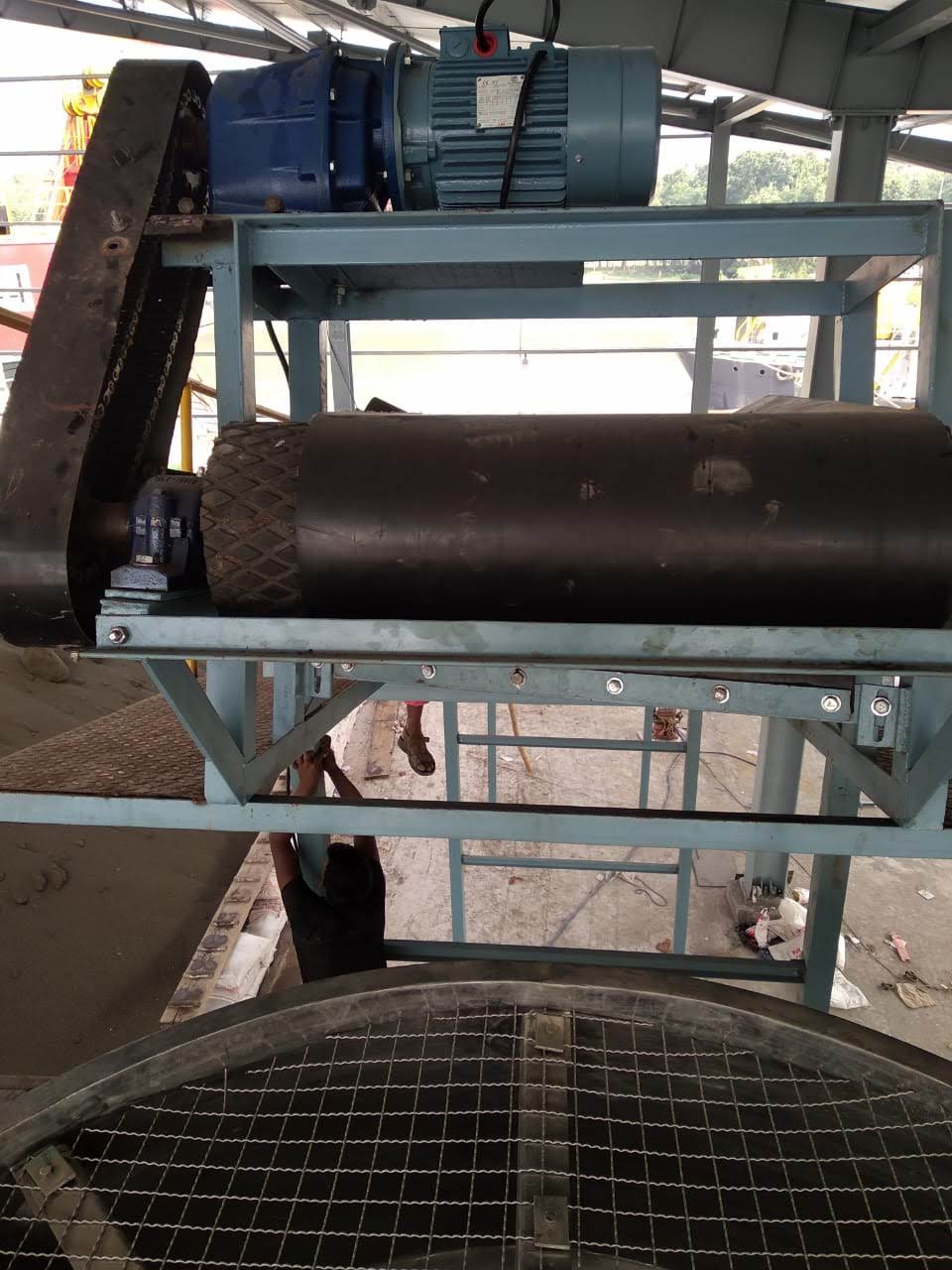
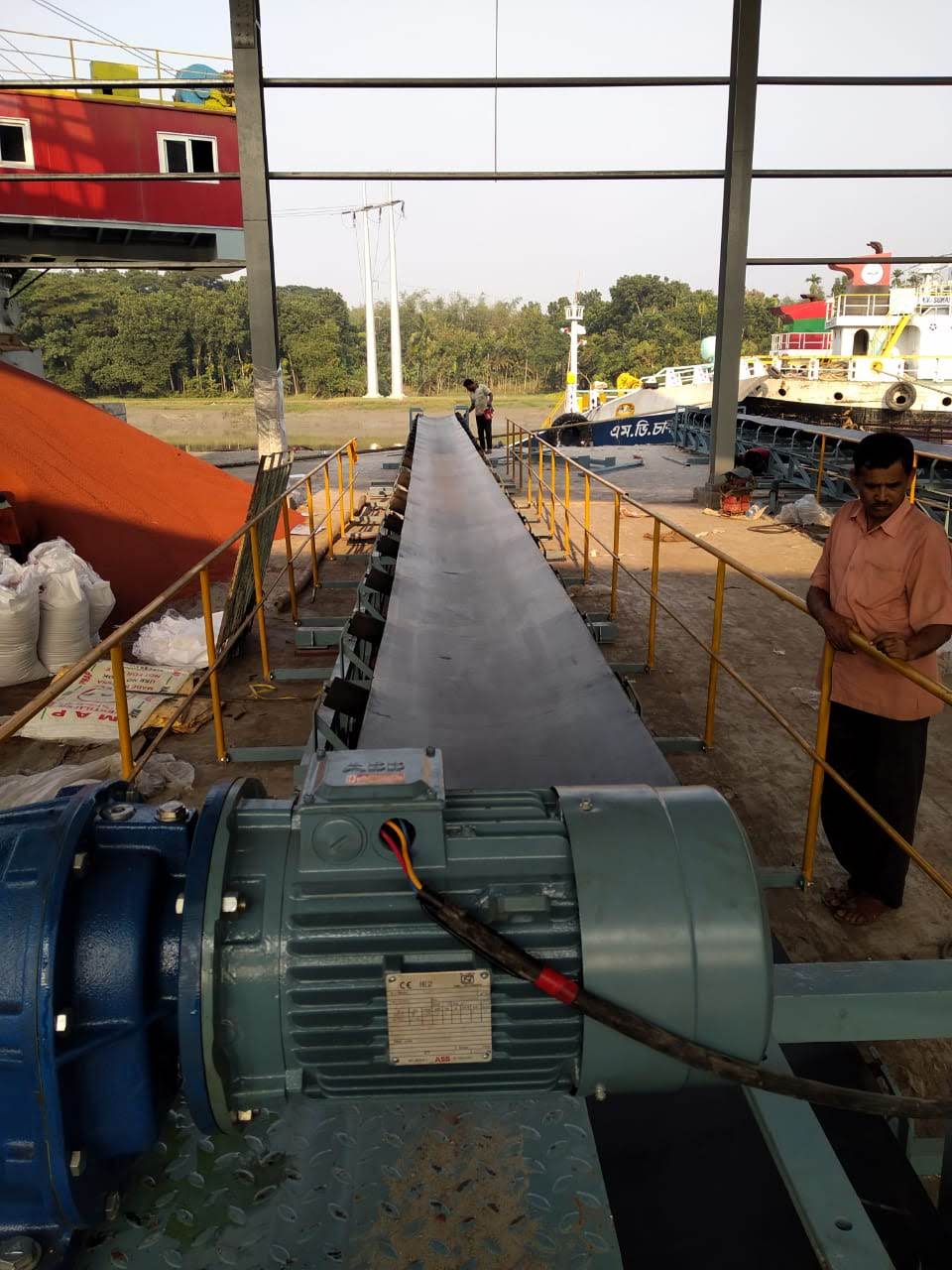
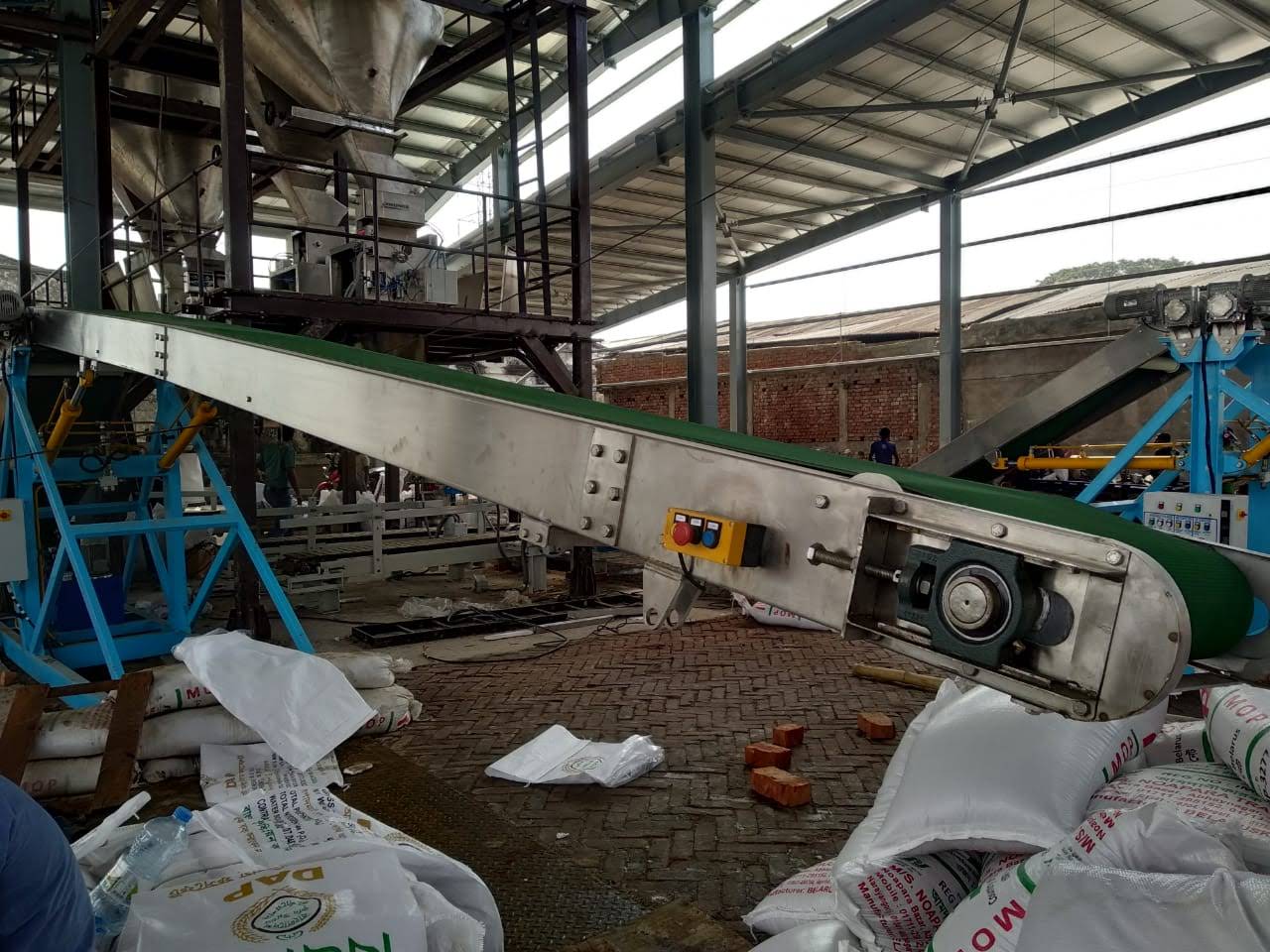
Conveyors can be configured for the required plant layout — transfer, accumulation, direction change, elevation, inspection and counting between the bagging machine and the loading point.
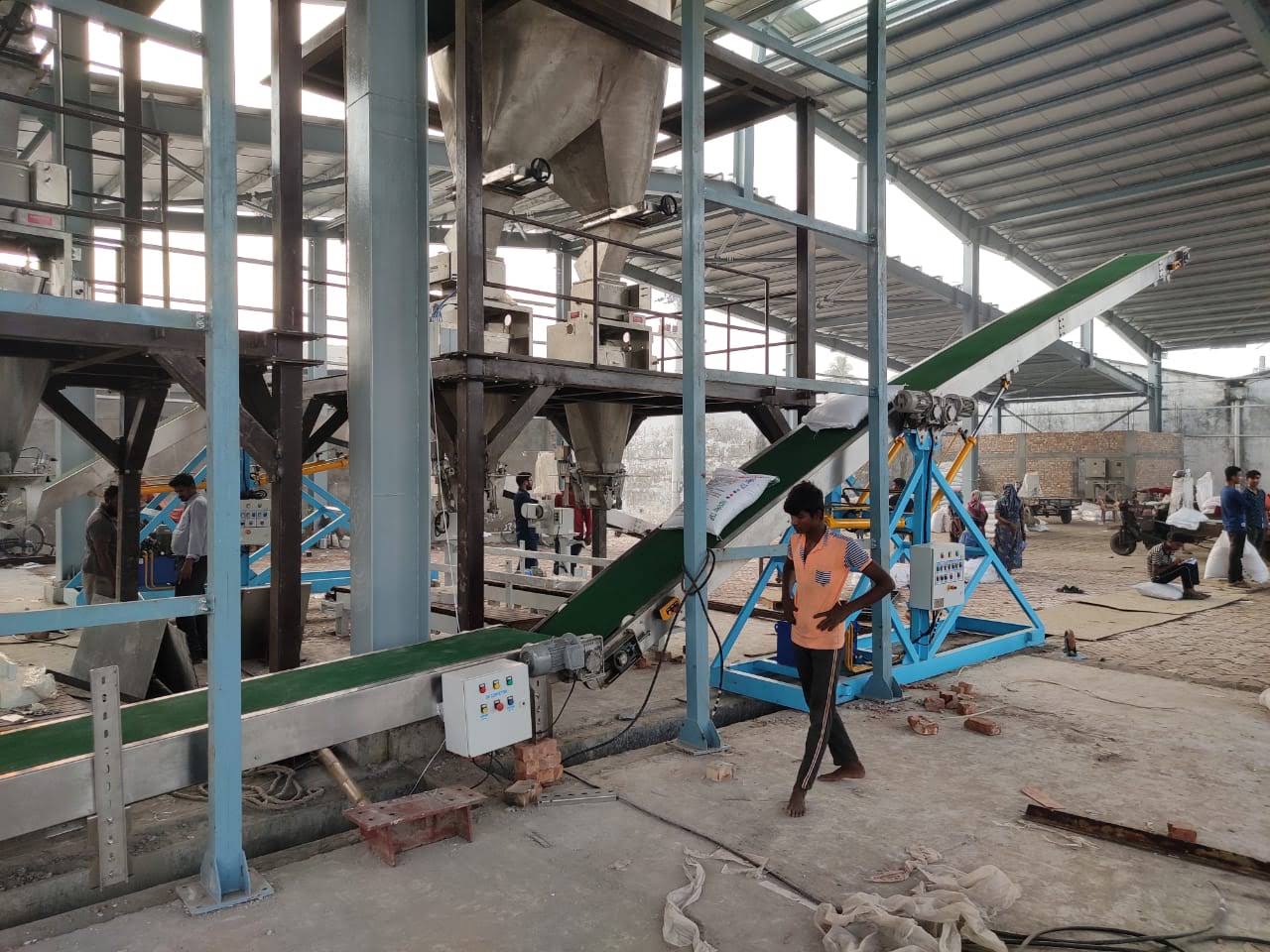
Automatic palletization, where the project requires it.
Where required, the finished bags can be integrated with an automatic palletization system for organized stacking, handling and downstream logistics. Automatic palletization solutions can be integrated according to project requirements.
The last conveyor ends inside the truck.
Finished bags can be conveyed directly to the truck loading system, reducing manual handling between packaging and dispatch. A telescopic or extendable conveyor advances into the truck body and retracts as loading progresses.
Features are confirmed per project against the loading bay, truck dimensions and required capacity.
Bulk material becomes a loaded truck.
The same sequence as the animation above, held still — the state of the product at each handover. This is the static view for print, mobile and reduced-motion viewing.
One control system across the line.
The complete line can be coordinated through a central control system, so feeding, conveying, filling, closing and loading run as one sequence rather than as separate machines. Not every function listed is standard — scope is set per project.
Weighing set to the bag, not to the machine.
Automatic bagging systems can incorporate weighing controls appropriate to the product and the required bag weight. The control approach is confirmed against the product's flow behaviour and the target weight rather than quoted as a fixed figure.
Dust control for powdered materials.
Powdered materials may require appropriate dust-control measures at the points where product is transferred or released. Provision is decided from the product and the plant environment; no emission level is claimed here.
Points to addressEngineered around your plant.
The same process can be laid out several ways. Which arrangement is right depends on the building, the position of the existing hopper or silo and where the trucks stand.
From concept to commissioning.
{{ s.name }}
{{ s.v }}
Sketch the line you need.
A conceptual enquiry tool, not a machine-sizing calculator. Your selections travel with the enquiry so the first conversation starts from your process rather than from a catalogue.
Generic system specification.
Capacity, weighing arrangement and equipment selection are fixed at the engineering stage against your product and layout. The table below is the frame the project starts from.
Safety & interlocksSafety systems are designed according to the equipment configuration and applicable project requirements.
Industries we can serve.
Bulk material handling & bagging gallery.
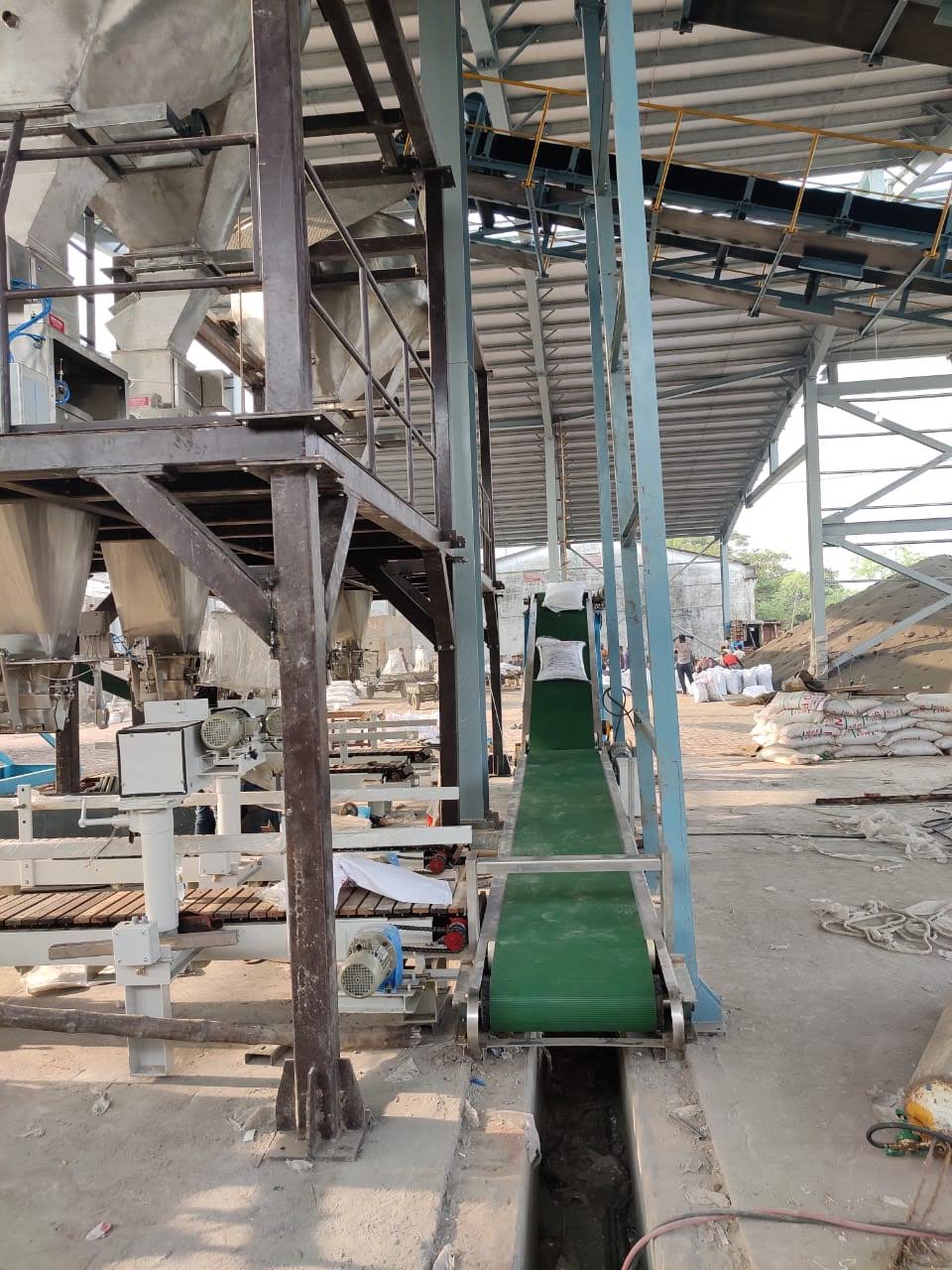
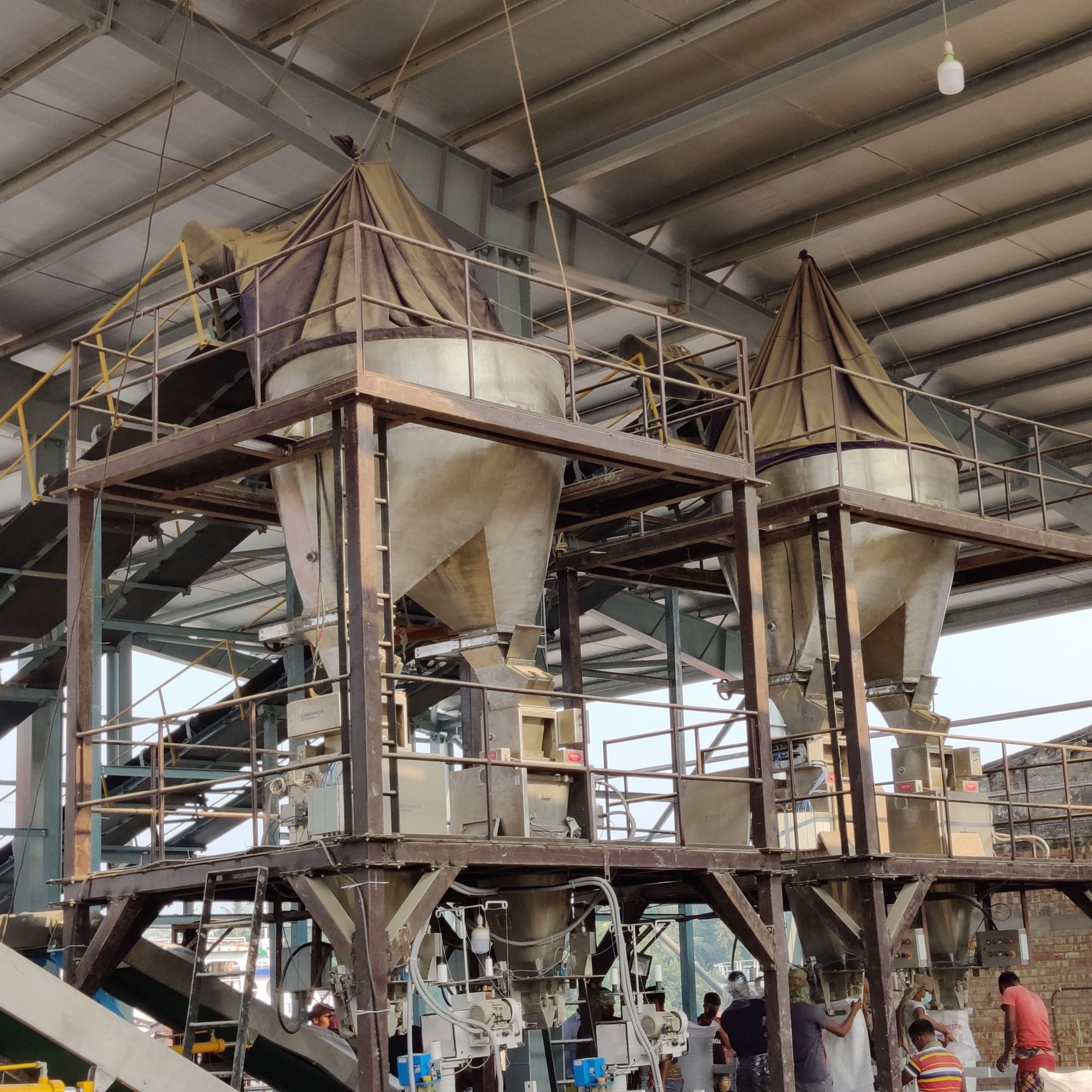
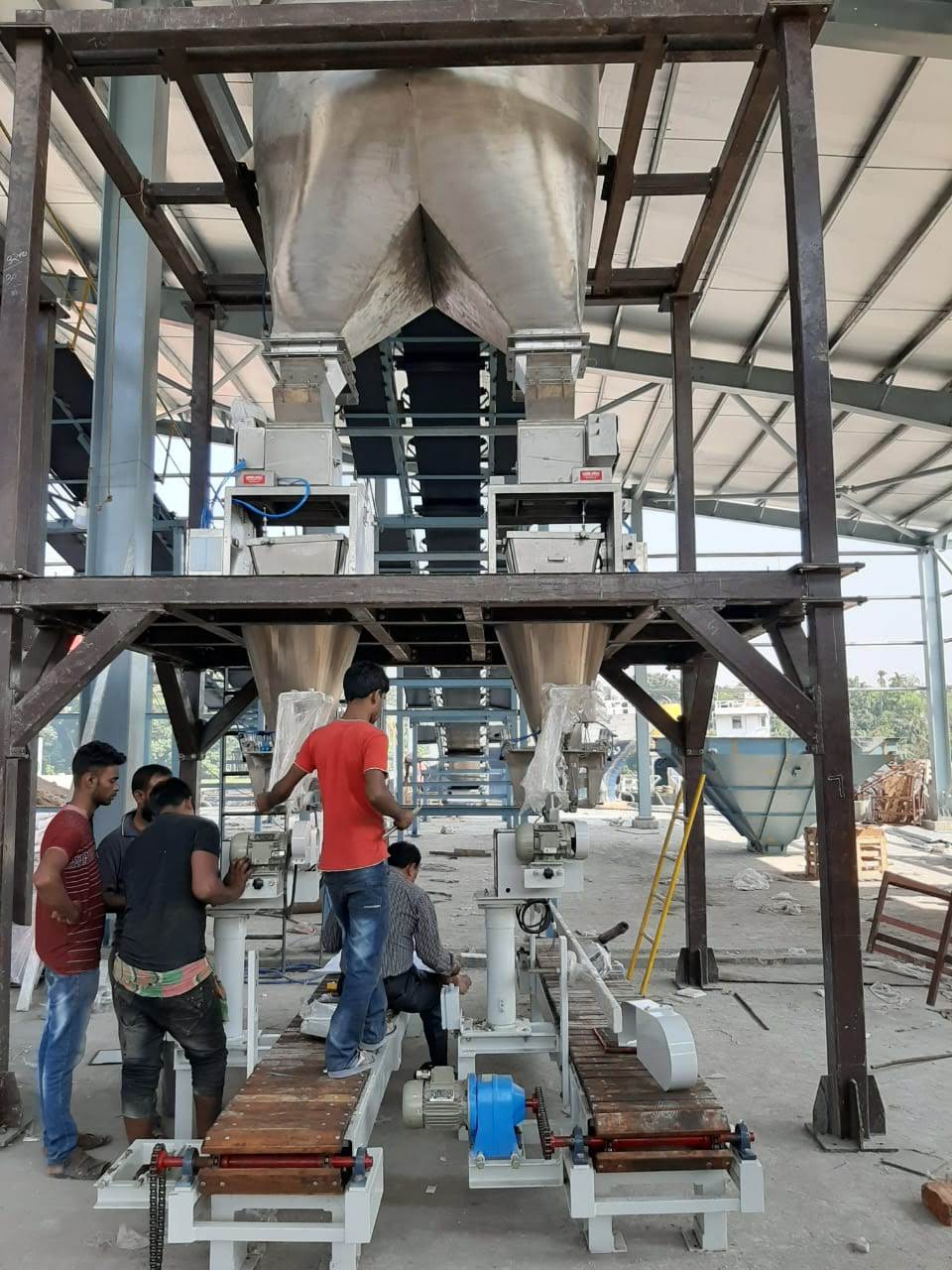
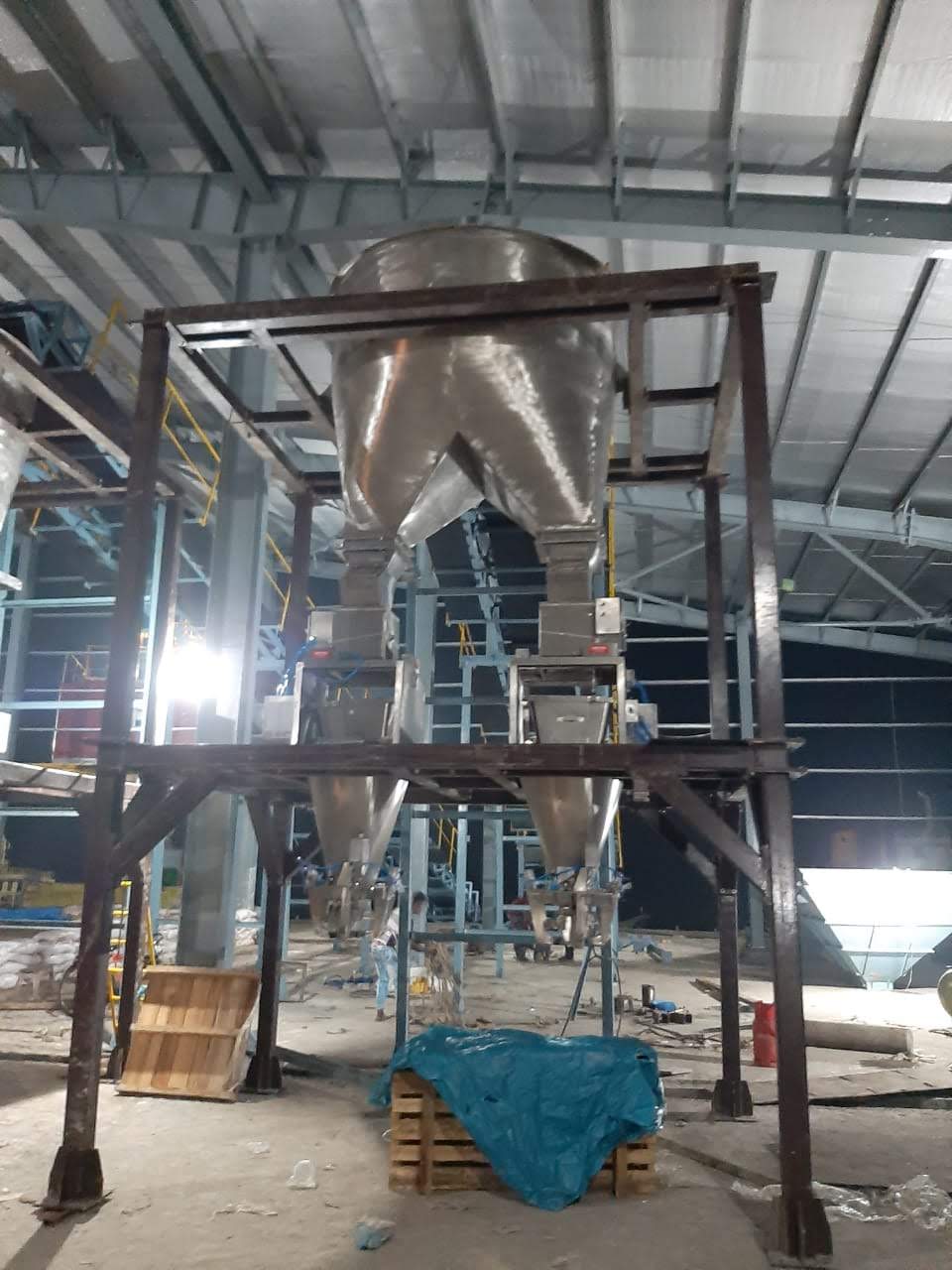
Photographs from Aeon projects — hopper erection, conveying, bagging stations, finished bag handling, control and dispatch.
A system integrator, not a machine supplier.
{{ w.name }}
{{ w.v }}
Designed for your product. Designed for your plant.
Every bulk-material handling project has different material characteristics, building dimensions, production requirements and dispatch arrangements. Aeon Tech Solutions can engineer the equipment layout and process flow around the specific application.
Planning an automatic bagging line?
Tell us what you need to bag, how much and how you want to dispatch it.
Discuss your bulk material handling project.
The more of the process you can describe — product, bag, capacity, existing hopper, dispatch arrangement — the more specific the first response can be.
Your configurator selections are included automatically with the enquiry.
salesats@aeontechsolutions.com